The Growth of Cambridge Schools in Kenya

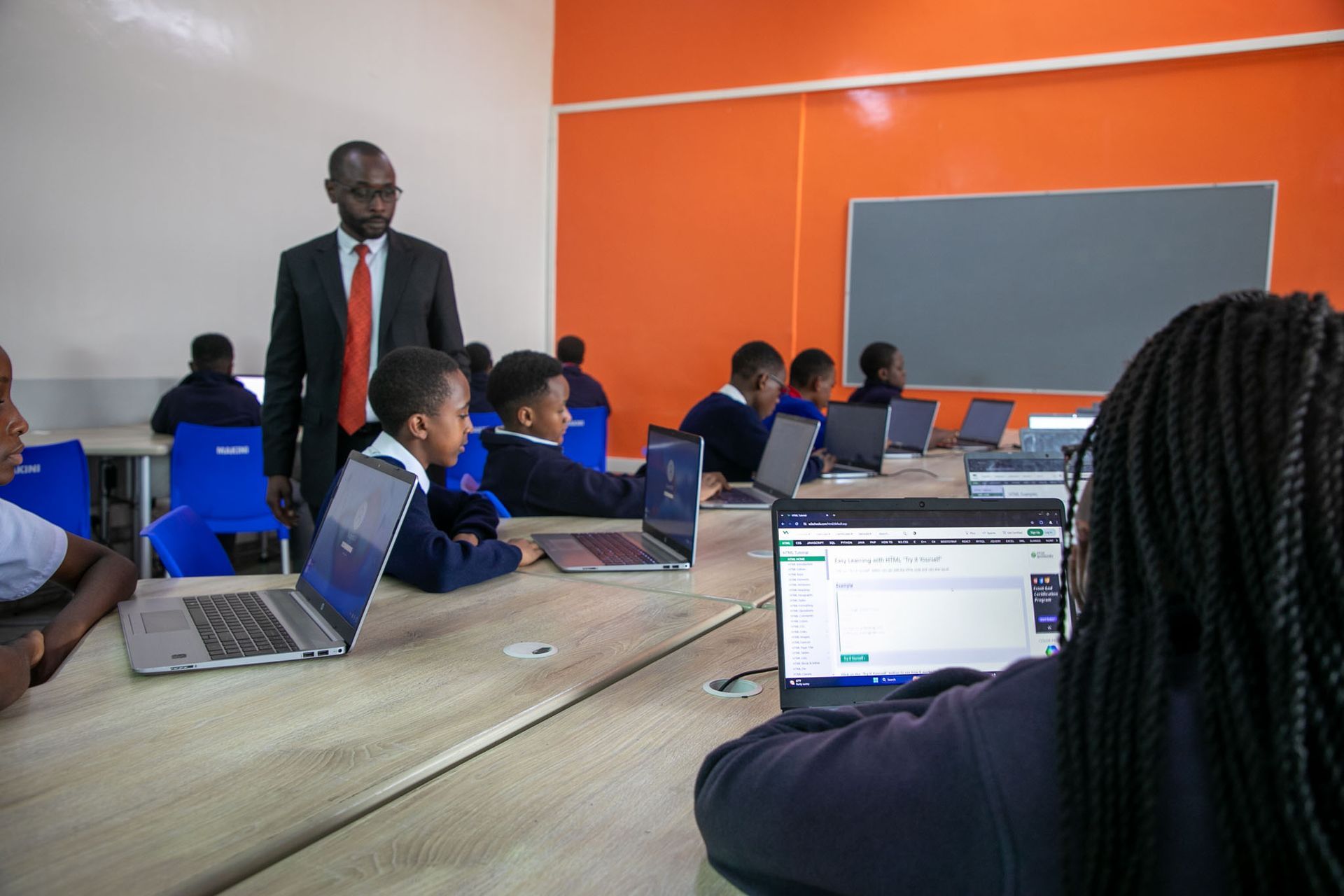
Parents want the best for their children. This is especially true when it comes to their education. That’s why it is no surprise that the Cambridge curriculum has become a popular choice of education among parents. At Makini School, we are proud to offer a world-class education that equips learners for lifelong learning.


The Cambridge curriculum is an internationally recognised teaching framework that prepares learners with relevant skills and knowledge for our ever-changing world. This explains the rise of Cambridge schools in Kenya. The curriculum is flexible, challenging, and culturally sensitive while being international in approach.


What’s the difference between the Cambridge curriculum and the Competency-Based Curriculum?


Makini School combines two types of curricula into our students' educational journeys for optimum results, namely the Cambridge curriculum and the Competency-Based Curriculum (CBC). These two frameworks are fundamentally different: the CBC focuses on developing practical problem-solving skills, while the Cambridge curriculum aims to build an in-depth understanding of subjects. 


The two frameworks also have different types of assessment methods. The Cambridge curriculum is comprehensive in scope. Learners can expect to take part in coursework, written exams and practical assessments. Competency-Based Curriculum, on the other hand, intends to assess learners' problem-solving abilities. Assessments are project-based assignments that encourage learners to collaborate with their classmates and put their problem-solving abilities to use.


What are the extrinsic benefits of a Cambridge curriculum?


1. Diverse Subjects

The Cambridge curriculum offers a wide range of subjects, allowing students to tailor their education to their interests and strengths. This flexibility is appealing to both students and parents.


2. Quality of Education

The Cambridge curriculum upholds a high standard of academic excellence. It ensures that learners develop skills and capabilities that create well-rounded individuals for future employment.


3. Global Recognition

This is an internationally recognised framework created by the University of Cambridge in the United Kingdom. Thus, learners who have been educated under the curriculum have a better chance of exploring international opportunities, such as studying abroad or seeking employment.


4. Extracurricular Activities

Learners are spoiled for choice with endless extracurricular activities to choose from. Whether it be sports, the arts, or community services, learners have the opportunity to find other passions outside of the classroom. 


5. Competitive Advantage

Learners who complete their education under the Cambridge curriculum have a global point of view, which gives them a competitive advantage when seeking opportunities outside of Kenya.


What are the intrinsic benefits of a Cambridge curriculum?


  1. Critical thinking
  2. Skills development
  3. Diverse perspective
  4. Preparation for higher learning
  5. Lifelong learning


Making the decision to enrol your child at a school requires research and patience. At Makini School, we have committed our time and resources to crafting curricula that guarantee the success of our pupils. As a result, parents can be confident that placing their children in our school is a recipe for success because our curricula nurtures both academic excellence and well-rounded development


February 10, 2026
Executive function skills are the mental processes that help children plan, focus, remember instructions and manage their behaviour. These skills act as the brain’s “control system,” guiding how children think, learn and interact with others. In primary school, strong executive function supports academic success as well as emotional maturity, independence and positive social behaviour. For parents and educators alike, understanding how these skills develop is critical to supporting child brain development in meaningful, practical ways. What Are Executive Function Skills? Executive function skills are commonly grouped into three core areas: 1. Working memory: This is the ability to hold and use information. For example, remembering multi-step instructions. 2. Cognitive flexibility. This is the ability to adapt, shift thinking and try new approaches. 3. Inhibitory control: This is the ability to pause, resist impulses and regulate behaviour. When a child remembers their homework, switches from maths to reading and waits their turn to speak, they are using executive functioning in kids in everyday situations. These skills develop gradually and are shaped by experience, guidance and environment. This is especially true during early and primary years. Read more on why early development is important. Why Executive Function Skills Matter in Primary School In school settings, executive skills directly affect learning as well as behaviour. · Working memory in children helps them to follow lessons · Self-regulation skills for students assists in managing emotions · Improving attention in school children is essential during tasks · Impulse control in classrooms helps to reduce disruptions Learners with strong executive functioning are better able to complete tasks, organise their work, manage frustration and collaborate with their peers. These skills also support independence and help children take responsibility for routines, deadlines and their personal behaviour. Key Challenges Children Might Face Some common signs of underdeveloped executive skills include: · Forgetting instructions or losing items · Struggling to switch between different tasks · Acting impulsively or interrupting the class · Difficulty managing emotions · Poor time awareness These challenges don’t mean that a child is lazy or incapable. They often reflect developing brain systems that simply need a little guidance and practice. How Parents Can Support Executive Function at Home Parents play a powerful role in shaping executive function. Simple daily strategies can be incorporated into their day to strengthen these skills naturally. Some helpful approaches include: 1. Create Structured Routines Consistent daily routines help children predict what comes next, strengthening organisation as well as emotional regulation. 2. Use Visual Schedules Charts or picture schedules support working memory in children by making expectations visible. 3. Play Memory and Focus Games Try matching card games, Simon Says, puzzles and sequencing games. These support attention, recall and flexible thinking. 4. Encourage Problem-Solving Let children help with cooking steps, packing school bags and planning simple outings. This builds independence and cognitive flexibility in primary education. When there is strong parental engagement, there is a direct impact on executive growth. Discover more on the impact of parental involvement . Classroom Strategies for Teachers Teachers are ideally positioned to reinforce executive skills on a daily basis. Some effective classroom strategies include: 1. Task chunking - Break assignments into smaller steps to reduce cognitive overload. 2. Use of timers and checklists – These are known to improve time awareness and self-regulation skills for students. 3. Positive Reinforcement - Praise effort, strategy and reflection, not just the outcomes. 4. Mindfulness and calm-down techniques - Simple breathing, quiet corners or reflection time can help strengthen emotional control and attention. These strategies are especially valuable in supporting impulse control in classrooms and improving overall learning flow. When to Seek Extra Help If challenges persist despite consistent support, children may benefit from professional assessment. Some signs for parents and educators to watch for include: · Chronic forgetfulness · Extreme impulsivity · Emotional dysregulation · Difficulty following basic routines Educational psychologists or SEN specialists can help identify neurodivergent patterns (such as ADHD) and guide tailored interventions. Early support ensures children build confidence rather than frustration. Encouraging Growth Through Play and Daily Practice Play is one of the most powerful tools for executive development. Activities that build executive function include: · Storytelling and role-play · Group games - Consider turn-taking or rule-based games · Pretend shops or restaurants · Reflection discussions about feelings or decisions These experiences strengthen executive functioning in kids in a natural and pressure-free way. Schools that prioritise early holistic learning , such as in strong preschool systems, give children a strong base for future academic success. Conclusion: Building Brains for Life Executive function skills are not fixed traits. They are trainable abilities that grow through consistent support, practice and patience. From working memory to impulse control, these skills shape how children learn, behave and relate to others. At Makini School we aim to create a supportive environment where our educators can nurture strong thinkers, confident learners and emotionally resilient students, building not just academic success, but lifelong capability. FAQs 1. What are the three main executive function skills in children? Working memory, cognitive flexibility and inhibitory control. 2. How can I tell if my child has weak executive functioning? Frequent forgetfulness, impulsivity, emotional difficulty and poor organisation are common signs. 3. What are fun activities to boost executive function in young children? Memory games, storytelling, puzzles, role-play and routine-based tasks. 4. How do executive function skills affect learning in school? They support focus, task completion, emotional control and classroom behaviour. 5. Can executive function skills be improved over time? Yes. With regular practice and supportive environments, executive skills develop steadily throughout childhood.
Stack of books topped with apple. ABC blocks and colored pencils on a wooden desk.
February 10, 2026
Learn practical tips and strategies to help your child adjust from the 8-4-4 system to the new Competency-Based Curriculum (CBE) in Kenya. Discover how to ease the transition with confidence.
Person using a laptop at a wooden desk, surrounded by tools, a notebook, and sketches.
November 19, 2025
Discover why early financial education is essential for children in Kenya. Learn how teaching kids money skills shapes their future success.
Group of people around a table, assembling electronics. They appear happy and engaged. Indoors, bright lighting.
November 19, 2025
Learn how parents and teachers in Kenya can prepare for effective and collaborative parent-teacher conferences. Strengthen school-home communication.
Children smiling and waving outdoors.
October 30, 2025
The Link Between Physical Health and Learning
Schoolchildren gather around a green table, looking at papers. Some wear blue uniforms, others white. One boy holds his head.
October 30, 2025
Learn effective strategies to help students develop essential communication skills for academic success, confidence, and future career readiness.
October 28, 2025
Discover how the CBE helps students explore and prepare for career pathways that match their skills, passions, and future goals.
Pile of spiral-bound notebooks, stacked. Each has colored dividers (green, blue, orange, purple).
October 28, 2025
Discover practical homework and study strategies that help students retain knowledge and achieve academic success.
September 5, 2025
Discover how reading aloud improves comprehension, builds confidence, and fosters a lifelong love of learning in students.
September 5, 2025
Learn why critical thinking matters and how schools can equip students with problem-solving and decision-making skills for future success.
Show More